
I am excited to share with you our current pantry set up in the basement. This is our stock pile and overflow destination for most of the foods in our home. I have a pantry upstairs where I keep staples that are used daily. Then, when they run out or low, I replenish from the basement foods.
As many people might believe these days, it is recommended that families have extra foods on-hand in their homes. Some sources would say one months’ worth, some would go farther. Whatever place you find yourself, having bulk foods in stock in your own home is always a good idea. It doesn’t mean we need everything, all the time. But, it does mean that we should live with a prepared mindset.
Living Prepared
I listened to a favorite family blog recently that mentioned they were not ‘preppers’ but they ‘lived prepared’. I like that approach! My Sweet Husband and I both have a tendency to plan and prepare ahead of time… sometimes way ahead of time. But, because of this, we find ourselves enjoying things more as a rule. We always enjoy things when we prepare for them.
Living prepared means more than just prepping for a big event. It is a way of life that affects every part of our day to day. Preparing and planning must go hand in hand. If planning isn’t your strong suit, I’ve made a short list of some habits to get into that may help in the long run:
- know what your family eats and keep a supply of non-perishable items on-hand, preferably one month at least- stick with whole foods whenever possible
- have a supply of fresh drinking water or a way to filter water
- seek to have extra prescription medications and herbal remedies, as well as bandages in the cabinet
- have extra soaps and detergents as well as toiletries
- keep your gas tank at least half full when heading home each trip
- have a bag you can grab at the ready (or keep items in your purse) as you head out the door in case of emergency
Does this list help? Or make things harder? It can seem overwhelming all at once. But take things a step at a time! This isn’t a list of do or die; this list isn’t meant to be an episode on hoarding. We are talking having and using these items in regular rotation. Begin NOW purchasing a bit of something extra when you shop to add to your stock of goods. A friend of mine decided to spend $5 extra each grocery shopping trip, getting extras like applesauce and canned fruit, paper towels and crackers. Over time, this can add up nicely! My sister keeps a nice amount of non-perishable items in particularly specified cabinets in her basement.
We don’t all have a basement or extra space to store these items we are keeping on-hand. What are we to do?
- utilize spaces you haven’t thought about: under beds, above linens in closets, under the sink
- add vertical space by installing shelving: closets, laundry room, etc.
- decide if you can get rid of some things in order to house the much needed items- purge, donated, pass on, burn… you get the idea
- downsize in some areas in order to be most efficient in others: Do I need 12 bath towels? Can I do without these extra shoes? Does the puppy need all of these toys? This may sound silly, I’m trying to lighten the load and still make a point.
Basement Pantry
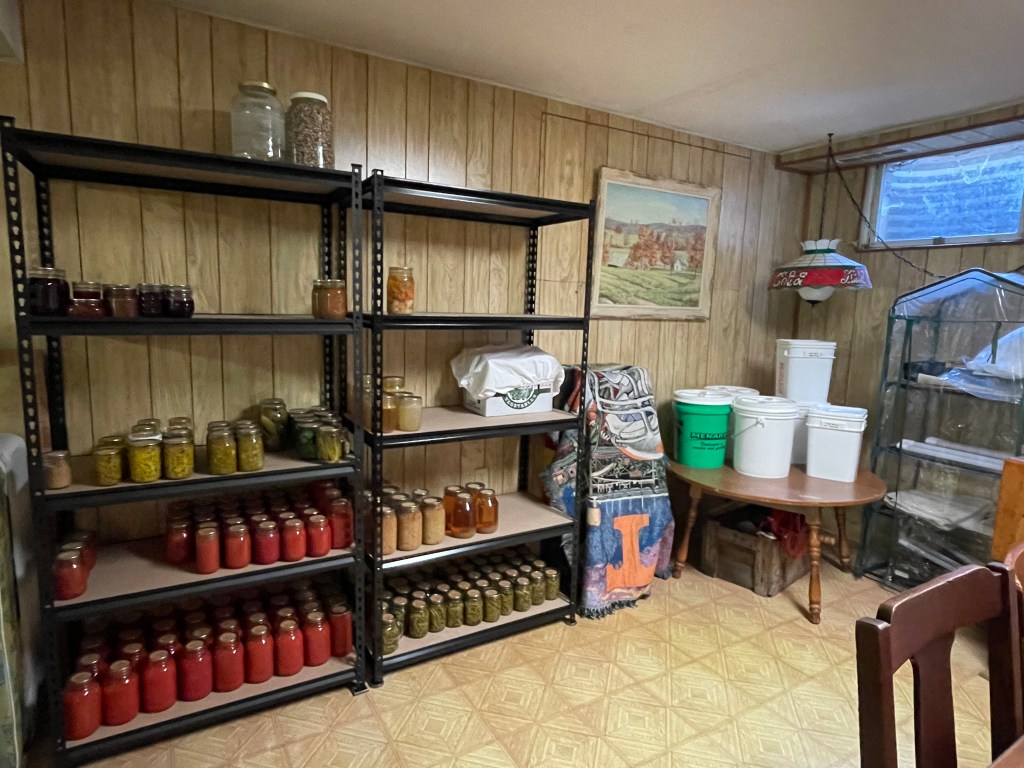
Here is a look at our stash:
Canning
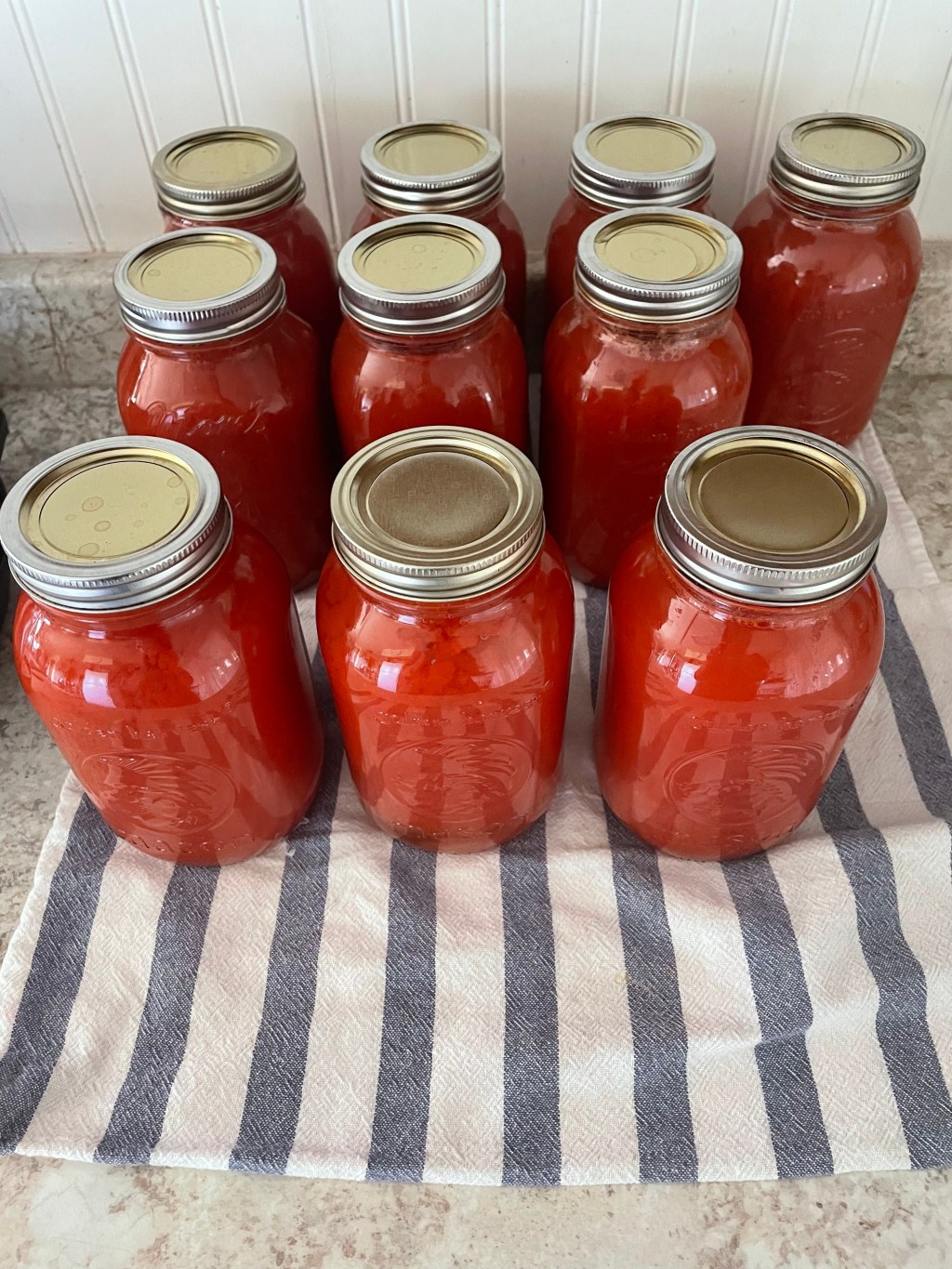
We were able to can more tomatoes and green beans this year as well as pickles and jams. My boys built a second canning shelf for me from a kit and we were able to set things up all in one place for ease and the joy of seeing our efforts on the shelves. It appears as though we should have enough green beans and tomatoes canned until the 2025 canning season. That is very encouraging! I am still hoping to can some other beans and soups in the coming weeks/months for convenience. More on that to come.
The box and bins covered in blankets are our potatoes, both homegrown and others locally grown. They are to remain in the dark, hence the covers.
Freezers
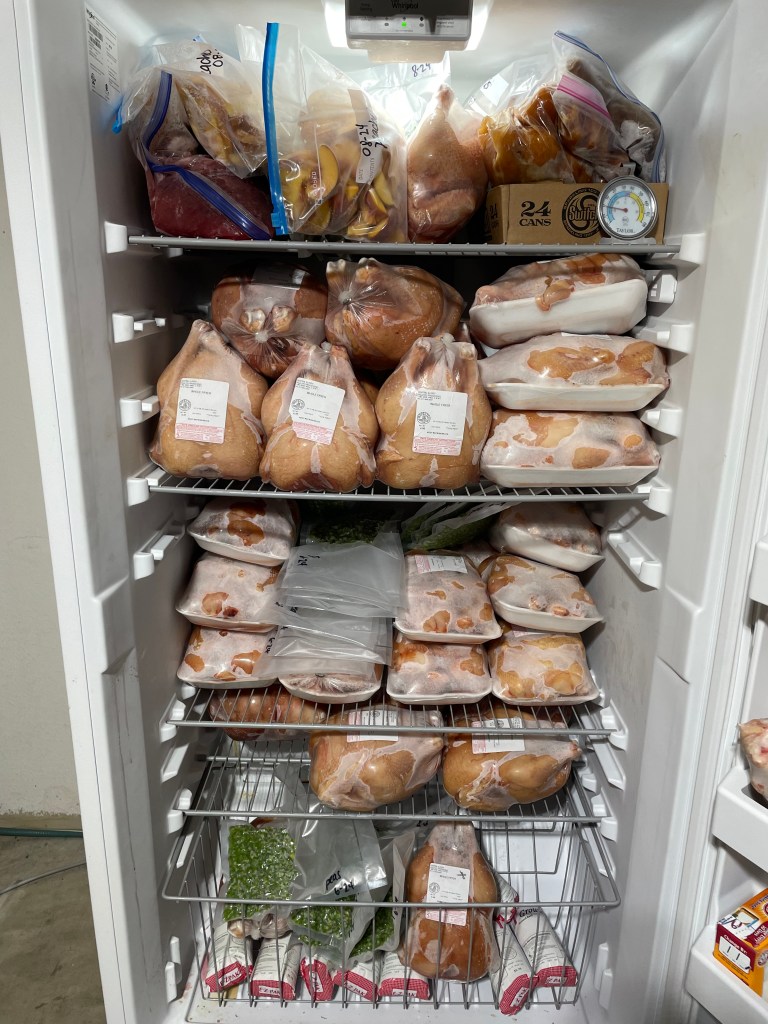
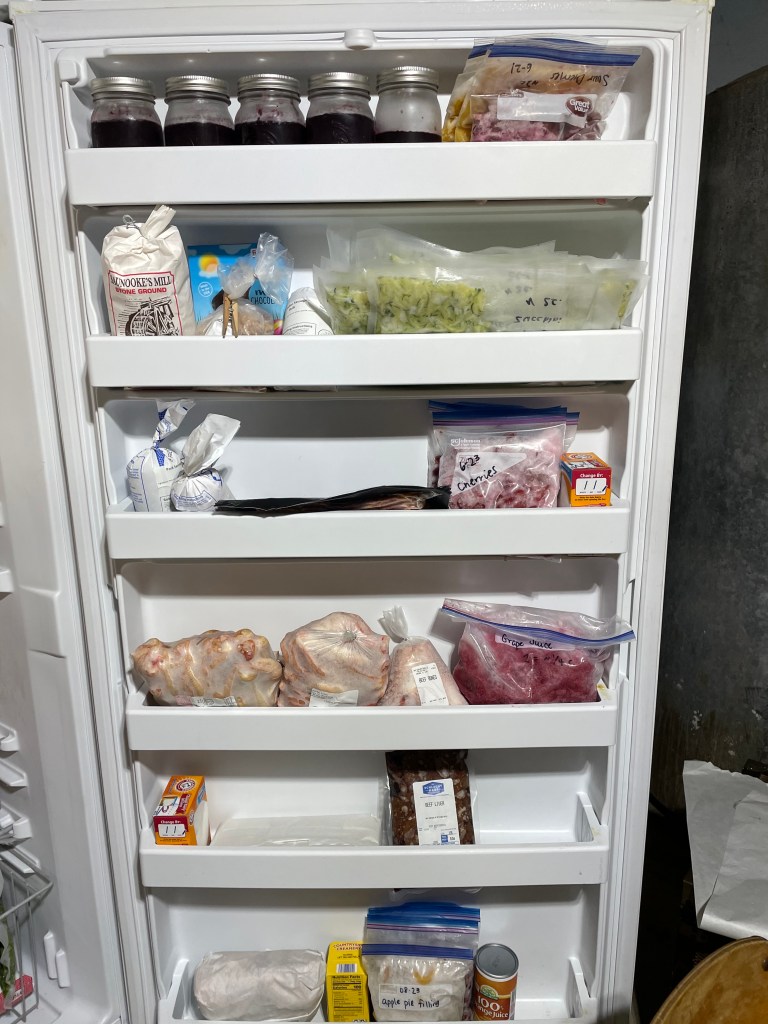
Everything we preserve doesn’t go into jars. Some of our veggies and jams as well as our chickens go into the freezer. We buy as much locally grown beef and pork as possible and its usually there as well. I am very thankful to be able to grow 100% of our own chicken at home.
Fridge
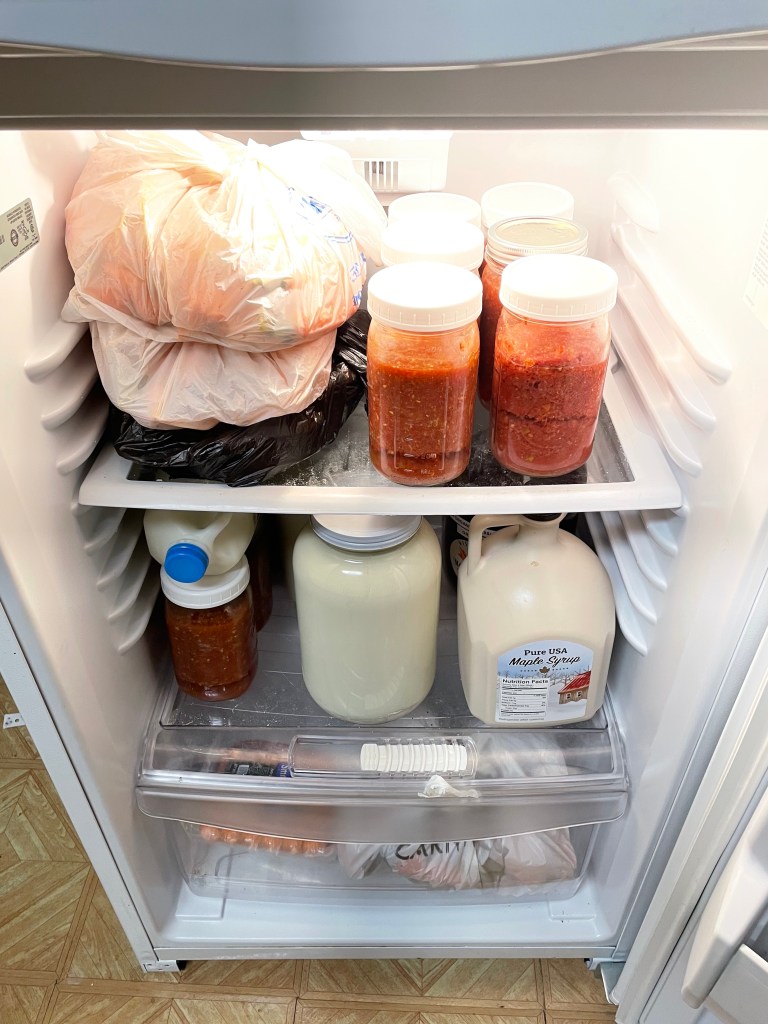
In our basement fridge we keep the carrots we grew in bags for use throughout the coming months. The fermented salsa is also here where it can stay for 9-12 months. When our maple syrup gets opened, it must go into the fridge as well. We purchase it from the Amish locally, though it is not made here in Illinois.
We are able to purchase raw milk locally sometimes, but it’s 30 minutes away and so we don’t go weekly. I do get regular milk from the store otherwise.
Dry Goods
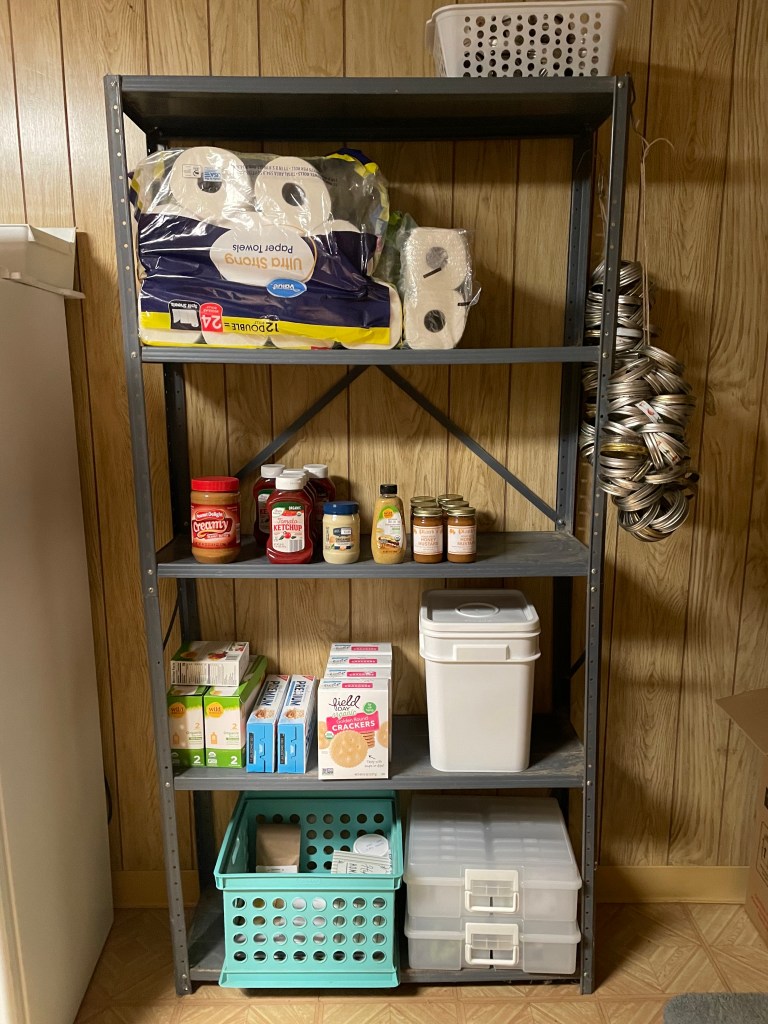
Our shelving unit holds store bought items we keep on-hand like condiments and some sale foods that are treats. As you can see, everything isn’t organic. I try to purchase organic whenever possible, but some things fall into that ‘20%’ category. Do your research; know your goods! I also keep my seeds and gardening records on this shelf. I have so many canning rings!

We keep 5 gallon buckets with Gamma lids to hold our grains and sugars. At this time, I have one each for rice and beans, sugar, and oats. Several other food grade buckets hold our wheat berries and corn meal. I do have one bucket with bagged organic corn chips in it.
We are very thankful and very blessed to have had such a lovely harvest. To God be the glory!
Tel me about your pantry!


 Honey and the Hen
Leave a reply to thebeautifulmountain Cancel reply