
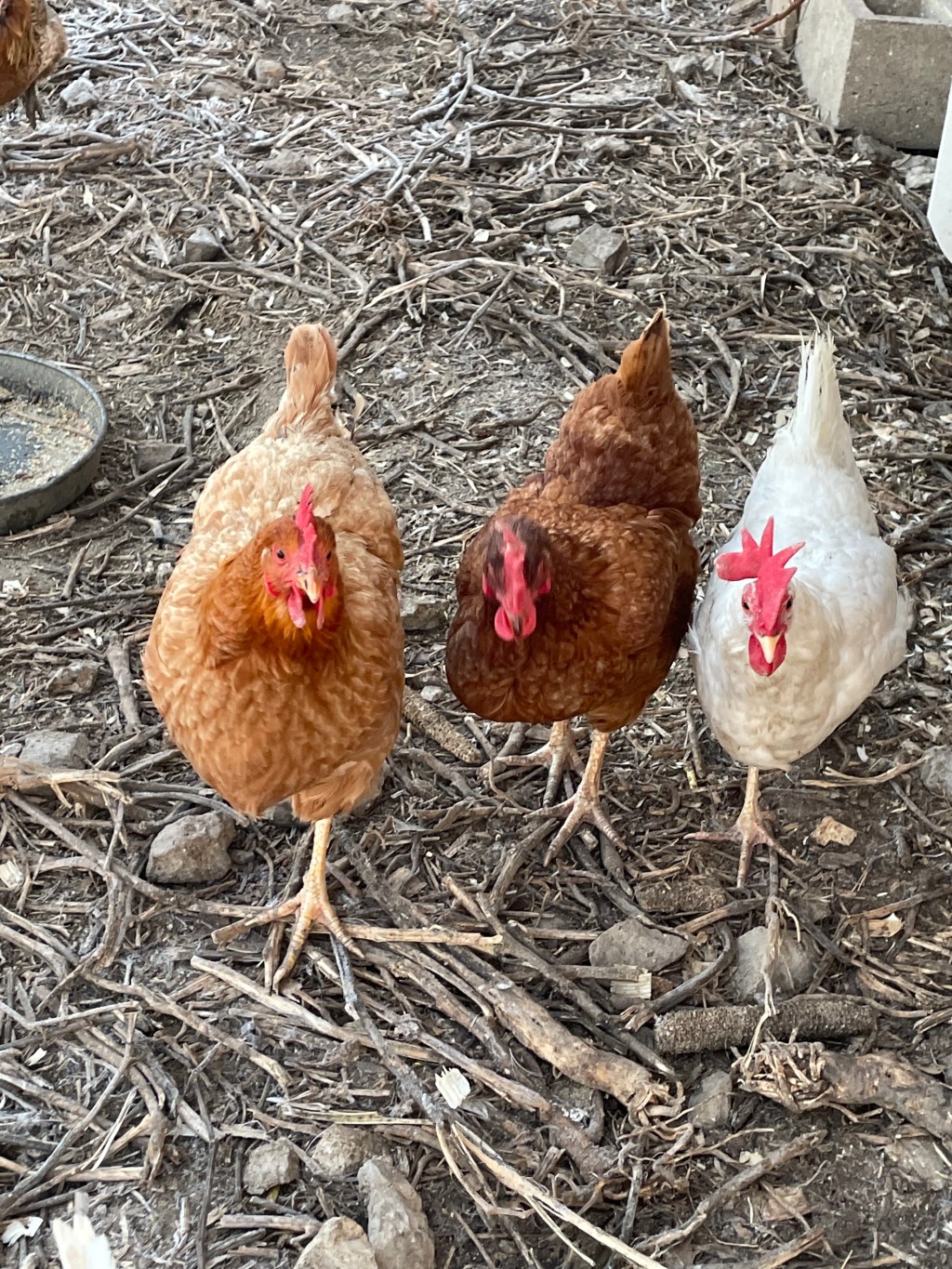
This isn’t a long post, but I’ve spoken to some chicken owners lately regarding feed and thought I’d do a small post on what we’ve been doing to feed our chickens!
We get our chicken feed from a local mill where we have the option of non-GMO layer, broiler, chick, and scratch grains. Since we have been fermenting our chicken feed, we have had to buy a lot less food. There is less waste. They are getting more benefits from the softer, soaked grains. Chickens have gizzards which help them digest their food. Some birds do not have them, so they need extra grit etc to help their digestive systems work. Even humans should soak their grains before eating them for the sake of our own digestive systems! But, let’s save that for another post.
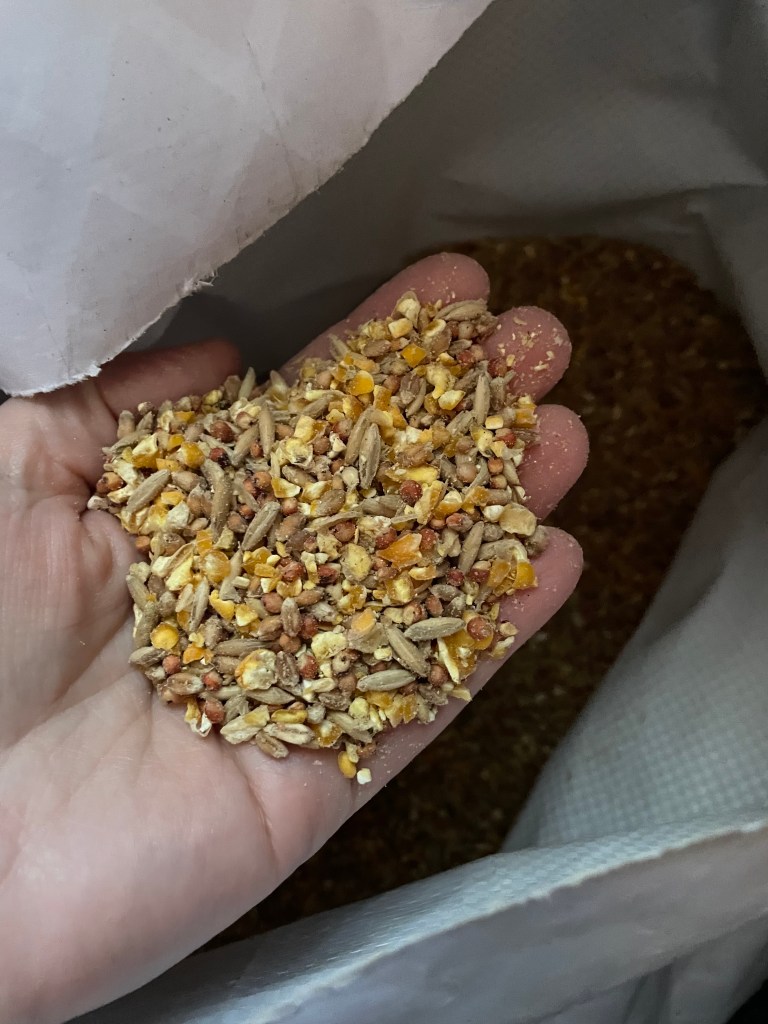
Our Version
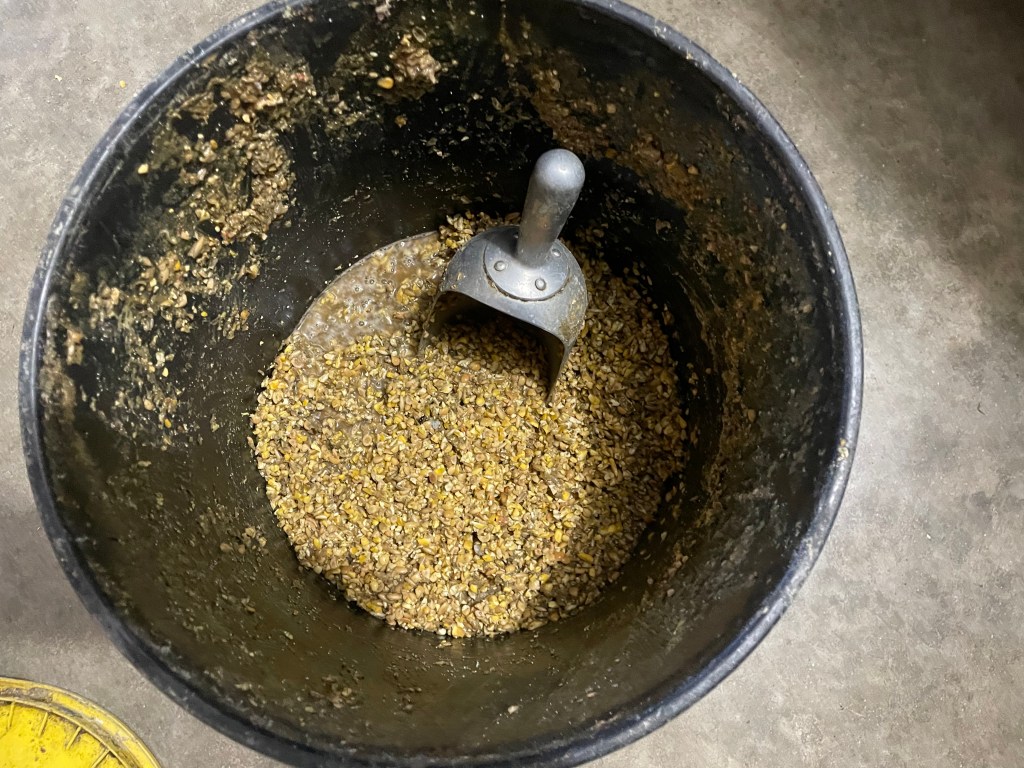
In order to feed 18 chickens soaked grains, we begin with a 5-gallon bucket halfway filled with layer feed. My sons are in charge of chicken chores so they take care of this routine. Once the feed is in the bucket, they cover it with water to about 1-2 inches over the feed level.
Next, we place a lid on it and wait 12-24 hours for the grains to soak in the water and soften. As you can imagine, this causes the level of feed to rise in the bucket to approximately 3/4 full of feed. During winter, we feed our chickens twice daily. This totally depends on your flock and the size of their feeder, not to mention your weather and their free ranging capabilities. When it is milder outside, they don’t require as much food because they can forage for it themselves. When it is time to make another batch, leave a bit from the past batch and that helps kick start the new feed.
Another thing to remember is that corn is something that can increase their blood flow, raising their body temperature. It is definitely a good option for birds in winter. I actually try not to feed them any extra corn during hot weather other than their ration.
That is all there is to it! You just have to stay ahead of yourself and keep the food soaked. Depending on the size of your flock, you may start 2 buckets going. You can begin small and see how fast they eat the soaked grains you’ve prepared. Remember that weather plays a huge roll in the fermenting process. As it is winter now, we keep out bucket of wet food in the garage and take it out when it is chore time so that it doesn’t freeze. In summer, be watchful of mold. You don’t want to make too much food ahead of time.
If you give this method a try, let us know how it works for you! Please subscribe to our emails and we will keep you posted on our goings on.


 Honey and the Hen
Leave a comment