

When I was planning out our spring on the homestead for ‘when to get what chick when‘, I decided to raise our meat chickens in the vacant coop (see previous post!) and get our layers a bit later to stagger their growth.
Last weekend, we took a trip about 35 minutes south and did a few fun errands, including purchasing 20 new baby laying pullets. At the first farm store, most of the chicks were already 3+ weeks old, so we drove a bit east and got some tinier babies who will take a bit longer to grow. That way our two types of chickens can stagger properly for growth and health!
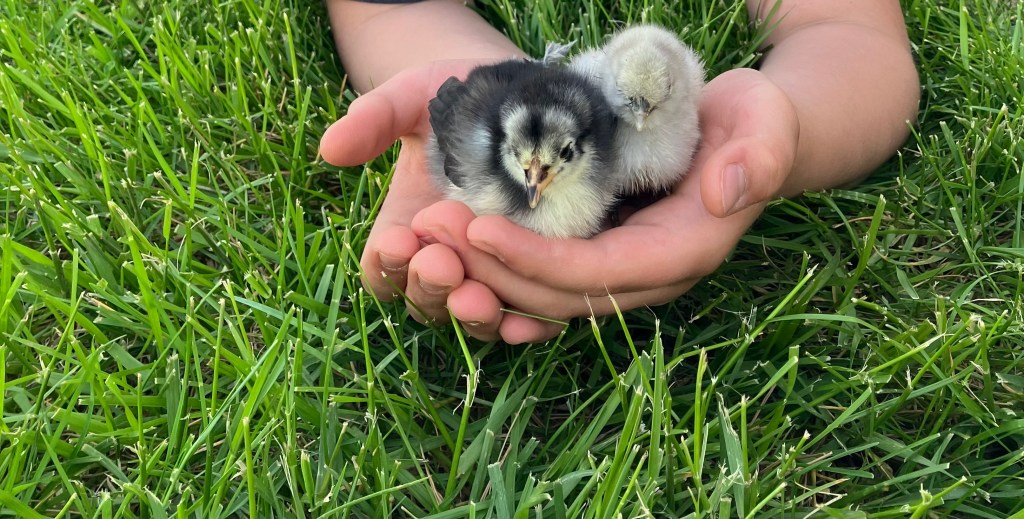
Personally, we like a variety of chicks as well as colorful eggs. That being said, here are the breeds we chose out of what were available:
- Americana (aka Easter eggers)
- Production Red
- New Hampshire Red
- Jersey Giants
- White Leghorns
- Lavender Orphingtons
This list gives us at least 3 colors of eggs. The White Leghorn breed will most likely begin laying eggs around 4 months old, whereas the other breeds generally begin laying around 6 months. To start off, they lay what are commonly known as pullet eggs and they’re tiny, as the hens are still growing themselves! These make for adorable fried eggs.
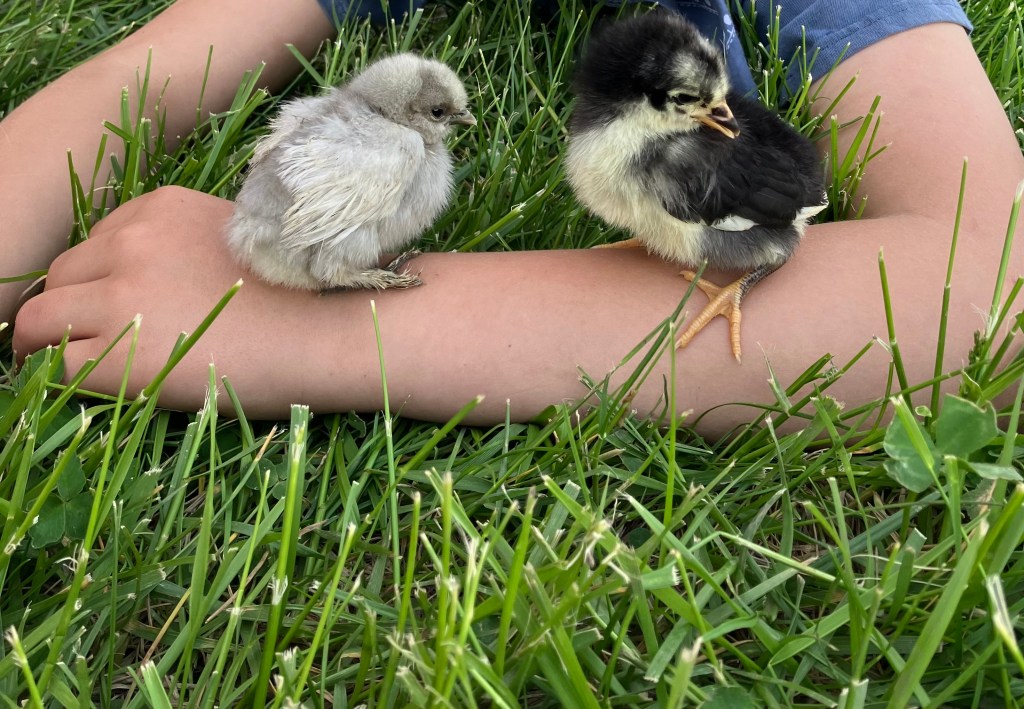
We have never had Jersey Giants before and my Sweet Husband has always wanted to try some. They are supposed to be very large yet docile. I have seen some from far off before and was amazed at how tall the roosters get.
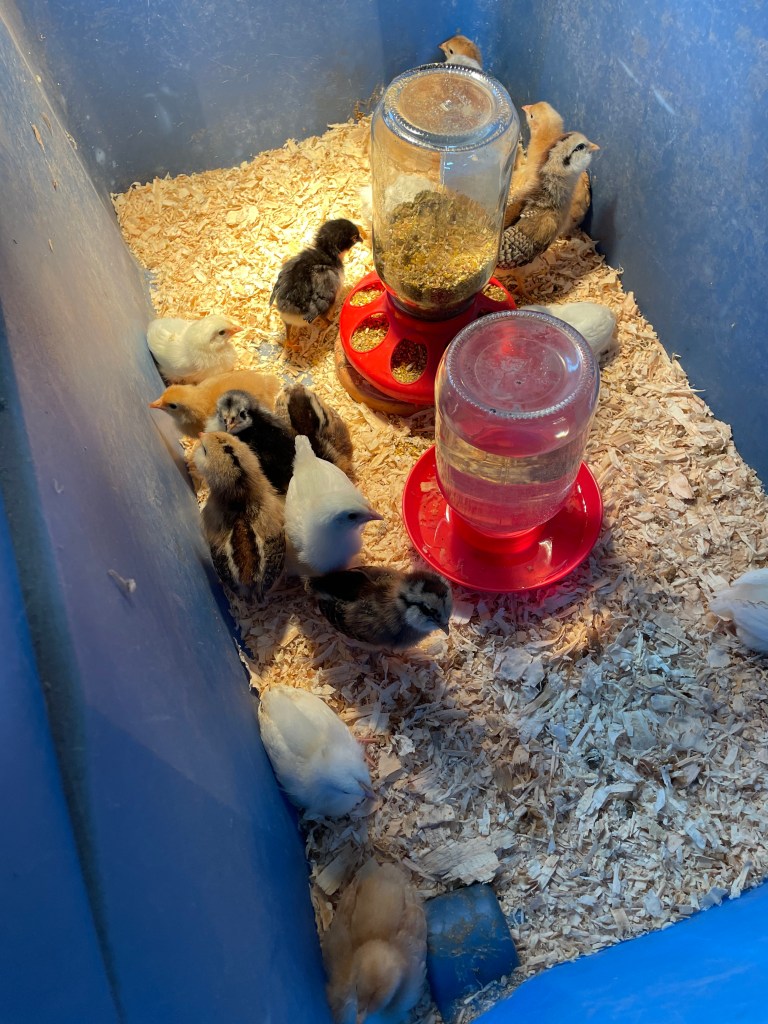
These chicks will grow for a few weeks together inside our tote ‘brooder’. We split them up into two brooders after 3 weeks so that they have enough room and then keep them in brooders until about 6 weeks old. By this time, we will have had our meat birds processed and can clean the coop and move the layers in!
Now… what to name them…
Chicks don’t need a ton to grow and flourish. The basics- food, water, and shelter, plus light (heat lamp)- are all they need. We use a pine shaving bedding and small feeder/waterers. Whenever possible, I get non-GMO food. It isn’t organic, but it also isn’t genetically modified. Our local Amish feed mill offers several livestock varieties of feed. Their prices are very reasonable and even less than the farm stores near us. You want to begin with a chick starter crumble. Then, once they’re outside and in their coop, you can move to a layer crumble or pellet.
Our sons take turns with chicken chores, altering each week. They give fresh water and fill food 1-2 times daily and change the bedding as needed. Save your bedding for the compost pile! The light (heat lamp) only needs to be on when it’s chilly as they grow. Watch their body language. If they are cramming as far from the light as possible, they’re too hot! Most chicks don’t die from being too cold- it’s the heat that would kill them.
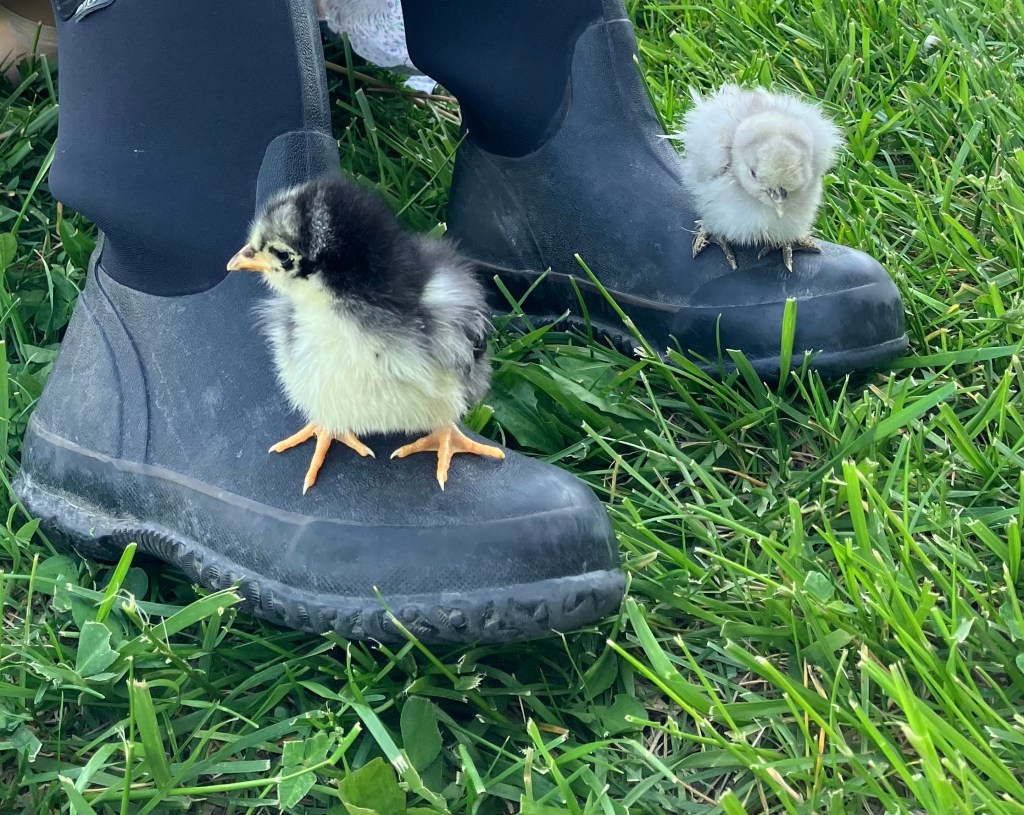
So! Are you ready to go out and get your own chicks? I hope your town or village allows hens for your family to enjoy. They’re an easy way to start with animals on the homestead and they are so much fun to watch! Hens can be more entertaining than any tv show! Just pull your lawn chair up near their pen, and watch their antics.





 Honey and the Hen
Leave a comment